Choosing replacement windows involves more than deciding on a frame color or glass style. The type of window you choose can affect how easily you ventilate a room, how much maintenance is required, and how your home looks from the inside and outside.
Two of the most common options homeowners consider are double-hung and casement windows. Both offer distinct advantages, but they operate differently and serve different needs.
So, which one is better for your home? Let’s compare their operation, ventilation, maintenance, energy performance, and overall practicality.
What Are Double-Hung Windows?
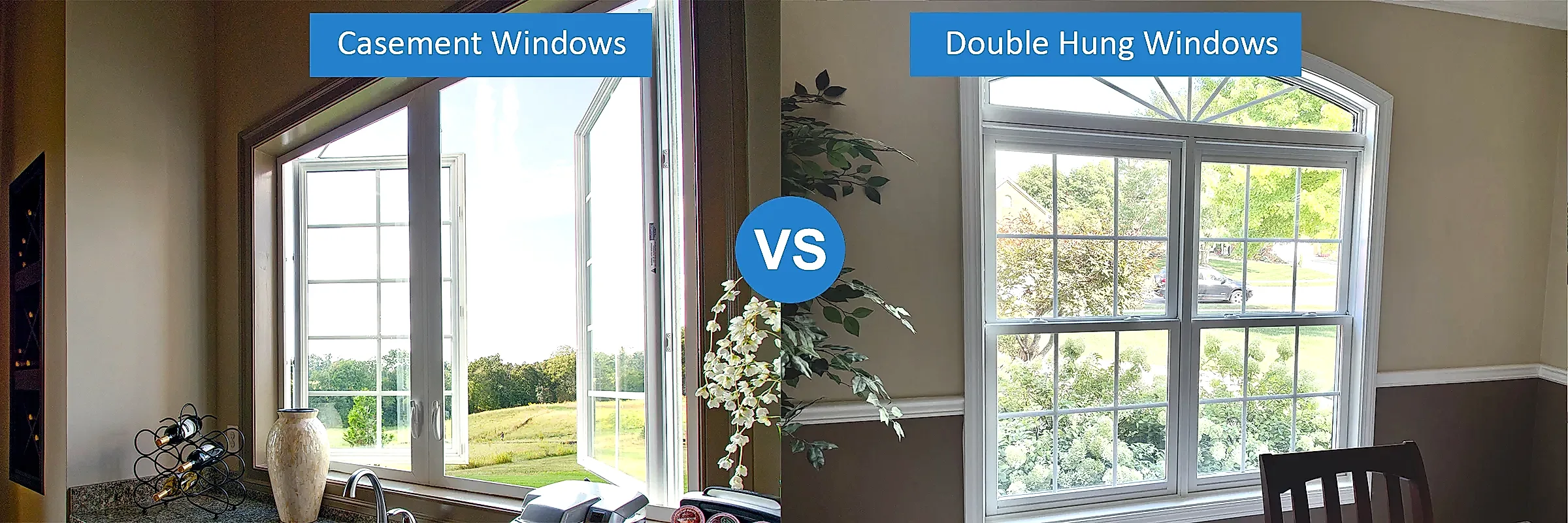
Double-hung windows feature two vertically arranged sashes, with both the upper and lower sections capable of moving up and down.
This allows homeowners to open the window from either the top or bottom. Many modern double-hung windows also feature tilt-in sashes, making it easier to clean the exterior glass from inside the home.
Their familiar appearance makes them a popular choice for traditional, craftsman, colonial, and many other architectural styles.
Advantages of Double-Hung Windows
1. Flexible Ventilation
One of the biggest benefits of double-hung windows is the ability to open either sash.
Opening the bottom sash allows fresh air to enter, while opening the top sash can help warmer air escape. Opening both can create a natural airflow pattern, depending on the room and outdoor conditions.
2. No Exterior Clearance Required
Double-hung windows move vertically within their frames, so they do not swing outward.
This makes them useful near walkways, decks, patios, landscaping, or other areas where an outward-opening window could get in the way.
3. Convenient Cleaning
Many modern double-hung windows feature tilt-in sashes. This allows homeowners to tilt the window panels inward and clean the exterior glass from inside.
This can be especially helpful for windows located on upper floors or in areas that are difficult to reach from outside.
4. Classic Appearance
Double-hung windows have a familiar, timeless look that works well with many home styles. They are often chosen for homes where maintaining a traditional window appearance is important.
What Are Casement Windows?
Casement windows are hinged along one side and open outward, typically using a crank handle.
Unlike double-hung windows, which slide vertically, casement windows swing open like a door. When closed, the sash presses against the frame to create a tight seal.
They are often selected for their clean appearance, generous glass area, and ventilation capabilities.
Advantages of Casement Windows
1. Excellent Ventilation Potential
Casement windows can open across much of their sash area, allowing a substantial amount of fresh air into a room.
Because the open sash projects outward, it can also catch passing breezes and direct some airflow indoors, depending on wind direction and conditions.
2. Unobstructed Glass Area
Casement windows typically do not have a horizontal meeting rail separating two movable sashes.
This creates a more continuous glass area and can provide a clean, open view outdoors.
3. Convenient Crank Operation
Rather than lifting or sliding a window, homeowners operate casement windows with a crank handle.
This can make them convenient in locations where reaching a traditional window sash would be difficult.
4. A Secure Closing Design
Many casement windows use multipoint locking hardware that pulls the sash firmly against the frame when closed.
The compression-style seal can contribute to good air-sealing performance. However, actual performance depends on the specific window, its construction, and proper installation.
Double-Hung vs. Casement Windows: Key Differences
Although both styles can be excellent replacement options, their differences become more noticeable when you consider how you use each room.
Neither style is automatically better. The best choice depends on the room, your preferences, and the conditions around the window.
Which Window Style Is More Energy Efficient?
Energy efficiency is one of the most important considerations when choosing replacement windows, particularly in the Pacific Northwest, where homeowners experience cool temperatures, rain, and seasonal weather changes.
Casement windows are often associated with strong air sealing because their sashes press against the frame when closed. This compression-style design can help limit air leakage.
Double-hung windows use a different sealing approach. Their performance depends on the quality of the weatherstripping, sash design, locking system, and overall construction.
However, window style alone does not determine energy efficiency.
Other important factors include:
Glass package: The number of panes, Low-E coatings, and gas fills can influence thermal performance.
Frame construction: Different frame materials and designs have different insulating properties.
Air leakage ratings: Look at the manufacturer’s published performance information when comparing products.
Installation quality: Even a well-performing window can have problems if it is not installed and sealed correctly.
When comparing replacement windows, evaluate the complete product rather than assuming one operating style will always be more efficient.
Which Style Is Better for Seattle-Area Homes?
For homeowners throughout the Greater Seattle Area, both double-hung and casement windows can be practical choices.
The right option often comes down to the room’s layout, ventilation needs, exterior clearance, and the architectural style of the home.
Here are a few situations to consider:
Double-hung windows may be a better fit if:
You prefer a traditional window appearance.
You want the flexibility of opening either the upper or lower sash.
You have limited exterior clearance.
You value the convenience of tilt-in cleaning features.
Casement windows may be a better fit if:
You want a larger, more uninterrupted glass area.
Maximizing the available ventilation opening is important.
You prefer crank-operated windows.
You have sufficient exterior clearance for the sash to open.
For either style, make sure the selected product is appropriate for the home’s exposure to rain and moisture. Proper installation, flashing, drainage, and exterior sealing are essential parts of a successful replacement project.
Can You Mix Double-Hung and Casement Windows in the Same Home?
Absolutely. You do not necessarily have to choose one window style for your entire house.
Some homeowners prefer double-hung windows in bedrooms and traditional living spaces while using casement windows in kitchens or other areas where ventilation and a larger glass opening are priorities.
Combining styles can also help accommodate different room layouts and architectural features.
The key is to consider how the windows will look together from both the interior and exterior. Frame colors, proportions, grille patterns, and sightlines can all influence the finished appearance.
When Should You Consider Replacing Your Windows?
Regardless of whether your home has double-hung or casement windows, there are several signs that it may be time to consider replacement:
Noticeable drafts around closed windows.
Difficulty opening, closing, or locking the windows.
Deteriorating, damaged, or warped frames.
Fog or condensation between insulated glass panes.
Recurring water intrusion or moisture problems around the window.
Hardware or operating components that repeatedly fail.
Not every problem requires a complete window replacement. In some cases, hardware repairs, adjustments, or insulated glass replacement may be sufficient.
Having the window evaluated can help determine whether repair or replacement makes more sense.
Choosing the Right Replacement Windows for Your Home
Double-hung and casement windows each offer advantages worth considering. Double-hung windows provide familiar operation, flexible ventilation, and a classic appearance. Casement windows offer generous ventilation potential, clean sightlines, and a compression-style closing design.
The right choice is not necessarily the most expensive option or the one with the most features. It is the window that best suits your home, your everyday needs, and your long-term expectations.
At Sound View Window & Door, we help homeowners throughout the Greater Seattle Area compare replacement window options and make informed decisions. With more than 17 years of experience in the Pacific Northwest, our approach emphasizes honest guidance, quality products, and professional installation.
Thinking about replacing your windows? Contact Sound View Window & Door to discuss your project and find the right window style for your home.